The air fryer arrived with the kind of hype usually reserved for phones: a countertop box promising fried-food joy without the oil, the guilt, or the smell. Years into the craze, kitchens have sorted themselves into two camps. In one, the air fryer runs almost daily and the full-size oven feels increasingly decorative. In the other, it sits unplugged behind the stand mixer, a monument to enthusiasm past. Both outcomes are common, which means the real question is not whether air fryers are good, but whether one fits how you actually cook. Here is the fair verdict, including the parts the ads skip.
What an Air Fryer Actually Is
Strip away the branding and an air fryer is a small convection oven: a heating element and a powerful fan in a compact chamber that circulates hot air around food very quickly. There is no frying involved. What the small chamber and aggressive airflow deliver is speed and surface crisping that a full-size oven struggles to match without long preheats. Understanding this demystifies everything the machine does well and badly, and it explains why owners of full-size convection ovens often shrug at the whole category. It excels at anything that benefits from hot, fast, dry air, and it cannot replicate the specific texture of true deep frying, no matter what the box art implies.
That gap matters less than skeptics assume. For the foods most people crave, the results land close enough to fried to be genuinely satisfying, while being dramatically easier and less messy to produce at home.
What It Does Brilliantly
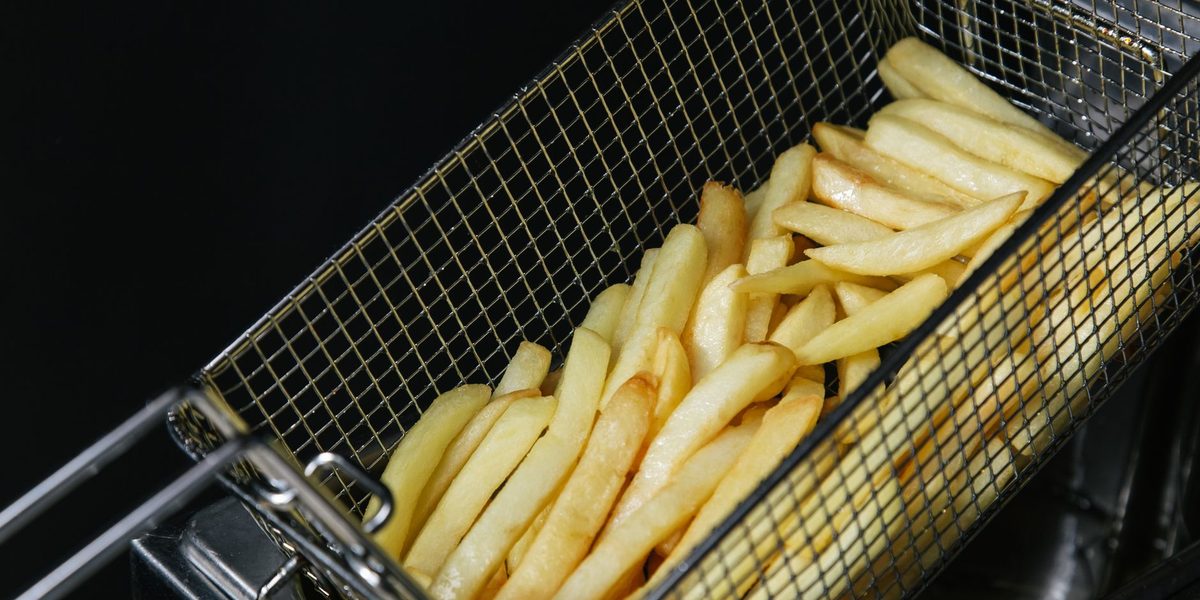
The air fryer's greatest hits are consistent across nearly every household that keeps one in service. Frozen foods are the headline act: fries, nuggets, spring rolls, and similar freezer staples come out crisp and evenly cooked in a fraction of the time an oven takes, with no preheating ceremony. Reheating leftovers is the sleeper feature, and for many owners the real reason the machine earns counter space. Pizza, fried chicken, and anything breaded revives with its texture intact instead of the sad chew a microwave produces.
Beyond that, roasted vegetables develop caramelized edges quickly, chicken wings and thighs crisp beautifully, and small portions of almost anything cook faster than the big oven can even preheat. For one or two people, weeknight cooking measurably speeds up, and in summer the machine roasts and crisps without heating the whole kitchen the way an oven does.
What the Ads Skip
The honest limitations deserve equal billing:
- Capacity is the deal-breaker: most basket models handle food for one to three people comfortably. Crowd the basket and crisping fails; cooking in batches erases the speed advantage. Families of four or more need the largest formats or should temper expectations.
- It cannot deep fry: battered foods drip and slump rather than crisp. Breaded coatings work; wet batter does not.
- It is loud: the fan is a constant whir that surprises first-time owners expecting oven-like silence.
- Cleanup is real: baskets, crisper plates, and grease trays need washing after most sessions, and nonstick coatings demand gentle treatment to last.
- It replaces techniques, not appliances: baking, big roasts, and anything needing gentle or moist heat still belongs elsewhere.
None of these flaws sink the category, but each one explains a portion of the machines gathering dust. The people who abandon air fryers almost always bought them for the wrong household size or the wrong style of cooking.
Basket or Oven Style: The Choice That Shapes Everything
Air fryers come in two main body types, and choosing between them matters more than choosing between brands. Basket-style units are the classic drawer design: compact for what they cook, fast, and easy to shake mid-cook for even crisping. They are the right call for households of one to three that mostly want fries, wings, vegetables, and reheating done fast. Oven-style units look like small toaster ovens with racks and often rotisserie hardware. They hold more, handle flat foods like pizza gracefully, can cook on multiple levels, and frequently replace a toaster oven outright, at the cost of a bigger footprint and slightly slower crisping.
A useful rule: if counter space is scarce and portions are small, go basket. If the machine will be your secondary oven, go oven-style and let it earn the space by replacing another appliance rather than joining the crowd.
The Counter-Space Question Nobody Asks in the Store
Air fryers are bulky, and the difference between a used one and an abandoned one often comes down to geography. A machine that lives on the counter, plugged in and ready, gets used constantly. A machine stored in a cabinet has to be hauled out, and that tiny friction kills usage with astonishing reliability. Before buying, identify the exact patch of counter where the unit will permanently live, with clearance for its hot-air exhaust. If no such patch exists, be honest about whether you will really retrieve it twice a week, because the cabinet is where air fryer enthusiasm goes to die.
This is also the strongest argument against oversizing. The biggest model crisps more wings, but only if its footprint does not exile it from the counter entirely.
Who Should Buy One, and Who Should Skip It
The air fryer is close to a slam dunk for singles, couples, busy parents feeding kids freezer favorites, anyone who reheats leftovers regularly, and people cooking small protein-and-vegetable meals on repeat. It rewards exactly the kind of fast, unfussy weeknight cooking most households actually do, and it lowers the activation energy of cooking at home instead of ordering out, which is quietly the most valuable thing a kitchen gadget can do.
Skip it, without guilt, if you already own a convection oven or a convection toaster oven, which do the same job with more room; if you cook primarily large family meals where batch cooking would negate the speed; if your cooking leans toward soups, stews, baking, and other moist methods; or if your kitchen genuinely has no counter to spare. Nothing about the technology is essential; it is a convenience multiplier, and convenience only multiplies habits you already have.
Getting Your Money's Worth
If you do buy, a few habits separate delighted owners from disappointed ones. Do not crowd the basket; air needs to move around food for crisping to happen. Shake or flip partway through most cooks. Use a light spritz of oil on fresh foods for color and crunch. Learn the machine's quirks with cheap frozen fries before attempting anything ambitious. And ignore the accessory ecosystem of racks, skewers, and cake pans until a real need appears, because unused accessories are just clutter with aspirations. Finally, wash the basket promptly after greasy cooks; baked-on residue is the main thing that shortens a nonstick basket's life, and a machine that stays pleasant to clean is a machine that keeps getting used.
Final Thoughts
So, are air fryers worth the hype? For small and midsize households that cook fast weeknight food, yes: it is one of the few viral kitchen gadgets that delivers real, daily value, mostly as a speed demon for crisping, roasting, and rescuing leftovers. It is not a fryer, not a family-scale oven, and not a substitute for the appliances you already own so much as a faster front door to them. Match the style and size to your household, give it permanent counter real estate, and it will earn its keep several nights a week. Buy it as a magic fryer for a family of six, and you already know which cabinet it will end up in.