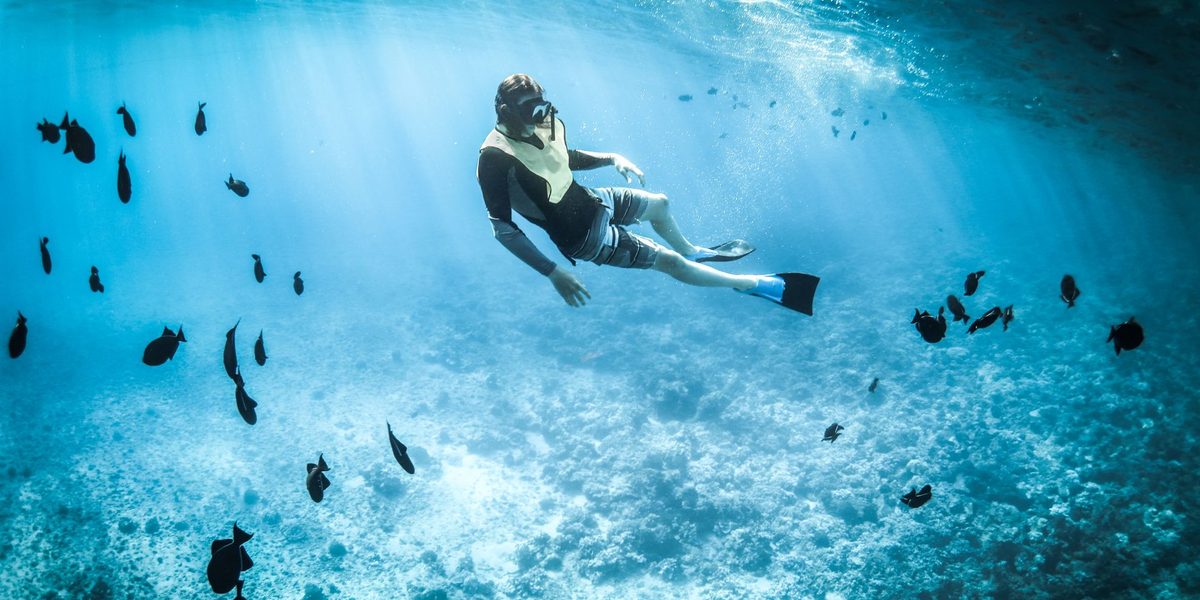
Underwater destinations are ranked dishonestly more often than any other kind. The brochure shows the whale shark; it does not show the ninety-minute boat ride in chop, the resort reef that has been loved half to death, or the current that turns a beginner's first snorkel into a survival memoir. The places that deserve your mask-and-fins budget are the ones where the water is reliably clear, the reef is reachable without heroics, beginners are genuinely safe, and the local industry protects what it sells. This ranking judges six of the world's celebrated underwater destinations on exactly those criteria — visibility, shore access versus boat dependence, beginner friendliness, and reef stewardship — with the trade-offs stated out loud.
How the Water Was Judged
Visibility is scored on consistency, not best-day legend — a destination that is crystalline most of the year beats one with a perfect month and a murky season. Access asks how much effort separates your towel from the fish: wading in from shore scores highest, long boat programs lowest. Beginner friendliness covers calm water, professional training culture, and forgiving conditions. Stewardship weighs marine protection, mooring practices, and whether tourism operates as caretaker or extractor. Marquee megafauna breaks ties.
6. The Maldives — Peak Water, Steep Entry Fee
The Maldives delivers the fantasy version of the genre: gin-clear lagoons, house reefs stepping straight off resort decks, and channel dives where mantas and reef sharks commute past you. Visibility is world class, and the top resorts run serious marine-biology programs. So why last? Because the experience is gated. Access effectively requires a resort or liveaboard budget, each island offers one reef rather than a coastline of choices, and the destination's remoteness makes it the biggest commitment on this list in both money and flights. Beginners are well served in the lagoons, but the famous big-animal sites run with current. As pure underwater spectacle per dollar, better ratios exist — as a honeymoon with fish, it remains untouchable.
5. The Great Barrier Reef — The Icon With Fine Print
The world's most famous reef earns its fame: the sheer scale is planetary, the biodiversity is encyclopedic, and the operator industry is polished, safety-obsessed, and heavily regulated — an excellent place to learn. The fine print: almost everything is boat-based, with the best outer-reef sites requiring long day trips or liveaboards, and the nearshore sites can disappoint travelers raised on the postcard. Visibility varies more than its reputation admits, seasonal stinger precautions are part of summer swimming, and the reef's well-publicized health struggles mean site quality genuinely varies — good operators go where the coral is thriving, which is why choosing carefully matters more here than anywhere. A bucket-list ecosystem; a mid-list logistics package.
4. Belize and the Western Caribbean — The Easy All-Rounder
Belize pairs the hemisphere's largest barrier reef with a laid-back, English-speaking, beginner-kind industry. Snorkelers are first-class citizens here, not afterthoughts: shallow reserve sites teem with rays, nurse sharks, and turtles in water calm enough for nervous swimmers, and the island bases put the reef minutes away by short boat hop. Divers get walls, canyons, and the geological celebrity of the great blue sinkhole. Stewardship is a genuine national project, with long-standing marine reserves. The cons: visibility is good rather than legendary, the famous sinkhole is more bucket-list checkbox than great dive, and the popular sites can queue up in high season. As a first underwater trip — especially a family one — this is arguably the smartest booking on the list.
3. The Philippines — The Biodiversity Heavyweight
The Philippines sits in the coral triangle, the richest marine region on earth, and it shows: more species on a single good reef than some destinations offer in total, plus sardine vortexes, turtles by the dozen, and macro life that turns divers into photographers. Value is exceptional — training, boats, and beachfront lodging at prices the Caribbean cannot approach — and island variety is effectively infinite. The cons: quality is uneven, with world-class reserves neighboring fished-out flats, so research and reserve fees matter; getting between islands eats travel days; typhoon season is a real calendar constraint; and some famous animal encounters are run with practices serious divers avoid — choose operators that keep interactions wild. High ceiling, variable floor, unbeatable value.
2. The Red Sea — The Visibility Kingdom
Egypt's Red Sea coast is the most reliable clear water on the planet: desert air, minimal runoff, and coral walls that start where the beach ends. House reefs along the quieter coasts let snorkelers and divers walk in from shore onto drop-offs that rival famous boat sites elsewhere, and the liveaboard scene serves wreck and shark itineraries at costs that undercut every rival. Coral health in the best-managed areas is remarkable, and the region's reefs are studied for their unusual resilience to warm water. The cons: quality varies sharply by resort zone, with heavily trafficked hubs showing wear while quieter stretches gleam; the destination is flight-plus-transfer effort for most travelers; and shoulder-season water runs cooler than the tropics. On the pure metric of what you see per effort once you arrive, only one place beats it.
1. Bonaire — The Shore-Diving Capital of the World
Bonaire wins because it removes friction better than anywhere on earth. The entire coastline is a marine park — protected for generations, moorings enforced, reef fees funding rangers — and dozens of marked roadside sites let you park, wade in, and be over healthy coral in minutes. No boat schedules, no groups, no negotiation: the reef is open whenever you are. Visibility is superbly consistent, conditions on the leeward coast are calm enough for the most nervous beginner, and the island's dive culture treats independence as the default rather than a privilege. Cons: it is a divers' and snorkelers' island, full stop — nightlife, beaches, and non-water activities are modest; big pelagic animals are rare; and the windward coast is off-limits rough. But judged on access, stewardship, reliability, and sheer time-in-water per vacation day, Bonaire is the best underwater destination in the world.
Match the Water to the Traveler
- Nervous first-timer: Belize's shallow reserves, then Bonaire's calm shores.
- Maximum species count: the Philippines, no contest.
- No-boat independence: Bonaire, then the Red Sea's house reefs.
- Big-animal ambitions: Red Sea liveaboards or Maldives channels.
- Honeymoon compromise: the Maldives — fish for one, spa for the other.
- Learning to dive on a budget: the Philippines, with operator diligence.
Season, as ever, is the silent variable. Every destination above has months when the water glasses over and months when wind or rain stirs it to milk, and the difference is bigger underwater than any brochure admits. Before booking, check the calm-season window for the specific coast — not the country — you plan to swim from, and build the trip around it. Clear water on an average reef beats murky water on a famous one, every single time.
Final Thoughts
The best underwater destination is the one that gets you in the water most often — spectacle you cannot reach loses to good reef at your doorstep every single trip. That is why Bonaire and the Red Sea top this list while more famous names trail: friction, not fish, is what actually determines how a snorkeling vacation feels. Wherever you book, favor operators who brief on reef etiquette, wear reef-safe sun protection, keep your fins off the coral, and treat every no-touching rule as the price of admission. The reef pays for the whole industry — the destinations that understand that are the ones still worth visiting.