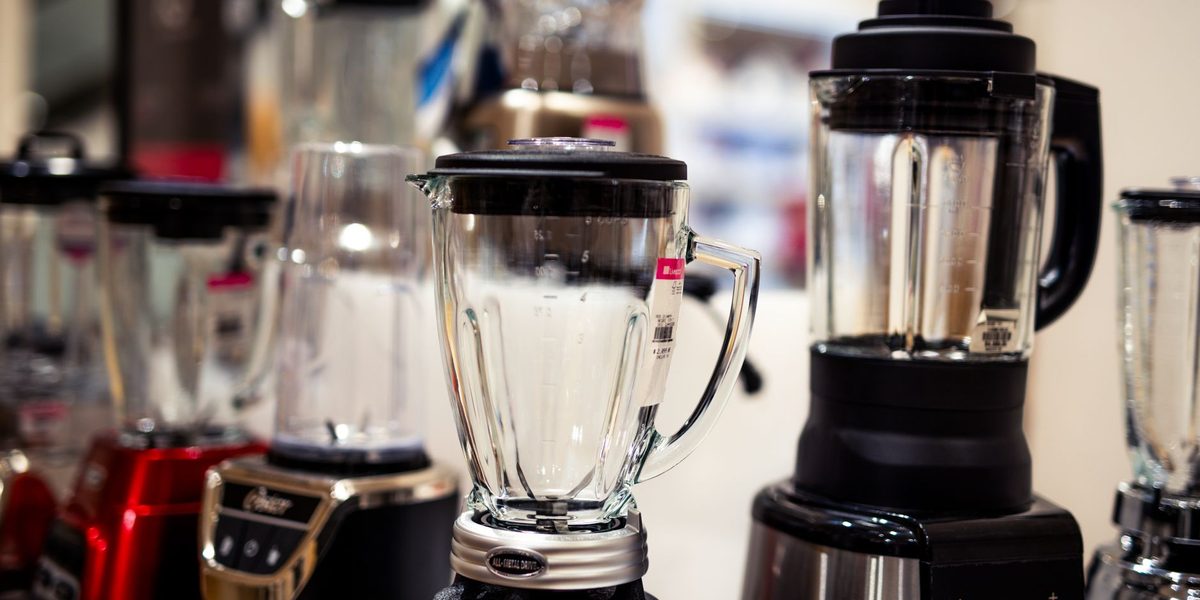
Three machines dominate the serious end of the kitchen appliance aisle: the blender, the food processor, and the stand mixer. They're all sizable, all real investments, and all surrounded by the vague suggestion that a proper kitchen owns the trio. That suggestion is wrong. These are three different machines for three different kinds of cooking, their overlap is smaller than advertised, and most households genuinely need one — sometimes two, rarely all three. Here's an honest sorting of what each machine actually does best, where they pretend to cover each other, and how to pick yours based on the food you already make.
What a Blender Actually Does
A blender does one physical thing supremely well: it turns food plus liquid into smooth. Smoothies, soups puréed silky, sauces, dressings, batters, crushed ice — anywhere the goal is pourable and uniform, the blender is the right machine. The tall narrow jar and fast blades create a vortex that needs liquid to work, and that requirement defines its limits. Ask a blender to handle dry, chunky, or stiff jobs and it stalls, overheats, or turns everything to paste past the texture you wanted.
Within the category, the honest hierarchy is about power and jar design more than features. High-powered machines genuinely earn their reputation for silkiness — fibrous greens, nuts, and frozen fruit vanish rather than fleck — but they cost several times as much, and a solid mid-range blender covers everyday smoothie-and-soup duty perfectly well. Personal bullet-style blenders are a legitimate budget answer for single-serving smoothie people, and immersion blenders deserve special mention: for puréeing soup right in the pot, an inexpensive stick blender beats hauling out anything with a jar. If soup is your main blending event, the stick might be all you need.
Two living-with-it factors deserve weight before purchase: noise and cleanup. Blenders are the loudest thing in most kitchens, and a machine that wakes the household gets used less than intended — worth remembering if smoothies happen before sunrise. On cleanup, jars that blend a drop of dish soap and warm water into their own bath make daily use realistic, while jars with tight corners and removable blade assemblies quietly discourage it. The best blender is the one whose after-use routine takes under a minute.
What a Food Processor Actually Does
Where the blender needs liquid, the food processor thrives on dry and solid. Its wide bowl and interchangeable discs shred cheese and cabbage in seconds, slice pounds of vegetables evenly, cut butter into flour for pastry, grind nuts, and pulse vegetables to an even chop without turning them to slush. It's a prep machine — a knife multiplier for volume work. Households that cook in batches, make slaws and gratins, process herbs by the bunch, or bake pastry get enormous value from one. Households that chop one onion a night do not; the machine takes longer to assemble and wash than the knife takes to do the job.
Capacity is the spec that matters most: small bowls force batching, which erases the machine's whole advantage. The pulse button and the shredding disc do most of the real work, and dishwasher-safe parts decide whether the machine gets used the second month. Mini choppers — the small food-processor cousins — are a sleeper pick for the specific household that mostly wants garlic, ginger, and herbs handled fast. They cost a fraction of the full machine, store in a cabinet corner, and remove the most common excuse for not cooking from scratch. Plenty of households that thought they needed a food processor discover the mini chopper was the whole requirement.
What a Stand Mixer Actually Does
The stand mixer is the most misunderstood of the three, because it's sold as a kitchen icon and bought as furniture. What it actually is: a baking machine. It kneads bread dough tirelessly, creams butter and sugar properly, whips egg whites and cream while your hands do something else, and mixes big stiff batches — cookie dough by the double batch, holiday volumes — that defeat arms and hand mixers. For people who bake weekly, it's transformative and lasts decades. For people who bake occasionally, a cheap hand mixer accomplishes ninety percent of the same jobs and stores in a drawer.
The buying logic inside the category is mostly about motor and bowl size versus your actual batches, and the attachment ecosystem — pasta rollers, grinders — is a genuine bonus for enthusiasts and a rationalization for everyone else. Be honest about which one you are. A stand mixer purchased for a fantasy baking life is the most expensive appliance regret in the average kitchen.
Where the Overlap Is Real — and Where It's Marketing
Each machine's marketing claims it can moonlight in the others' jobs, and the truth is mixed:
- Blender as processor — it can rough-chop in a pinch, but the vortex turns to purée fast; texture-sensitive jobs like salsa come out wrong.
- Processor as blender — it purées thick mixtures like hummus beautifully, but leaks with thin liquids and never achieves smoothie-smooth.
- Processor as mixer — it actually makes excellent pastry dough and can knead small bread batches; this is the most legitimate crossover of the bunch.
- Mixer as processor — only with purchased attachments, at which point you've bought both machines anyway.
The practical summary: hummus and pastry live comfortably in two camps, and everything else belongs to its specialist. Buy for the jobs, not the moonlighting.
Choosing by the Food You Make
Ignore the appliance aisle and read your own table instead. Smoothies most mornings, soups in rotation? Blender first, and maybe blender only. Big-batch cooking, slaws, homemade pastry, holiday prep for a crowd? Food processor first. Bread every weekend, cookies by the double batch, cakes for every birthday in the family orbit? Stand mixer first. If two of those describe you, buy the two — used weekly, each earns its space honestly. The machine that doesn't match any sentence above is the one to skip, no matter how good the sale is.
For a household starting from zero with a modest budget, there's a humbler path that covers a surprising amount: an immersion blender for soups and sauces, a hand mixer for occasional baking, and a decent knife for prep. Total cost, a fraction of any one big machine — and an honest way to discover which volume of cooking you actually do before investing in the specialist.
Longevity and the Second-Hand Question
All three categories reward buying simple and mechanical. Machines with metal gears, real switches, and replaceable parts routinely outlive their owners' kitchens; feature-laden electronic versions add failure points without adding capability. This is also the rare appliance category where second-hand shopping is genuinely smart — stand mixers especially are built to survive decades and appear constantly at estate sales, usually because someone bought a fantasy. One household's abandoned ambition is another's daily workhorse at half price. Check that the motor runs smooth and quiet, the attachments are present, and nothing wobbles, and vintage can beat new.
Final Thoughts
The blender liquefies, the processor preps, the mixer bakes — three verbs, three machines, and no rule that says you need all three. Match the machine to the meals you already make, let the crossovers save you a purchase where they honestly can, and give the leftover counter space to the cutting board. A kitchen that owns one big machine it uses daily is better equipped than one displaying all three machines in permanent showroom condition, untouched since the holidays.