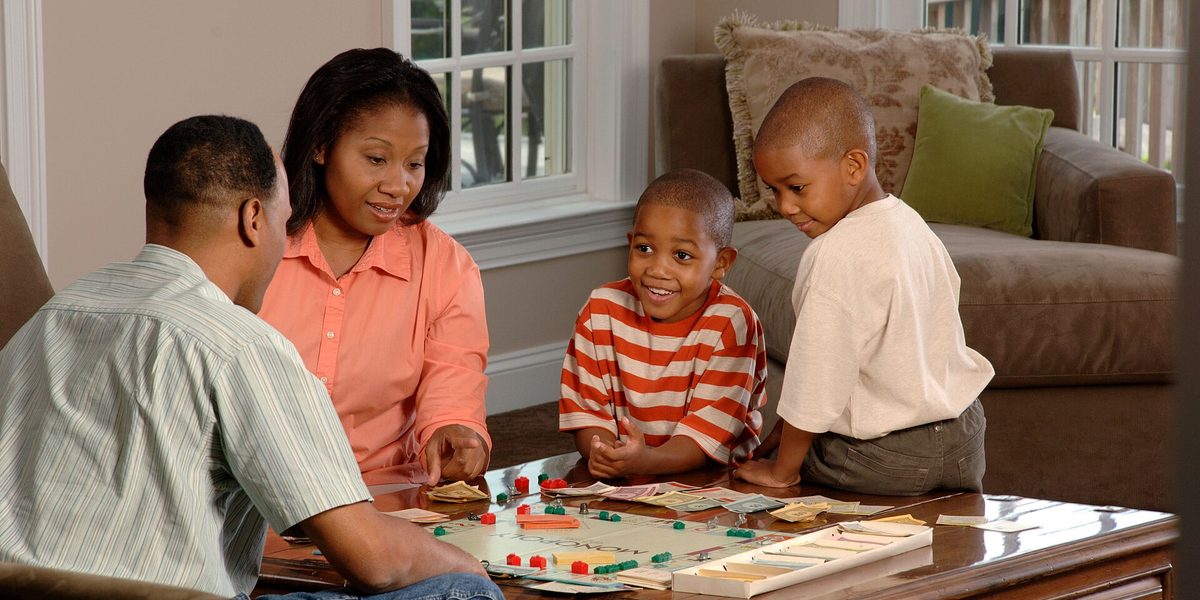
Every family knows the scene: a movie chosen for everyone that pleases no one. The youngest is scared or bored, the teenager is performing detachment, one parent is answering messages, and a grandparent is asking who that character is for the third time. The something-for-everyone pick is the hardest selection problem in home entertainment, because a mixed-age room is really four audiences wearing one blanket. And yet some families reliably pull it off. What they know is that genuine all-ages entertainment is rare and specific, that age labels tell you less than people assume, and that the picking process itself — who chooses, and how — matters as much as the pick.
The Difference Between All-Ages and Merely Harmless
The central distinction most families never make explicit: content that is appropriate for everyone is not the same as content that is for everyone. A great deal of children's programming is perfectly harmless for adults and utterly empty for them — bright, loud, and frictionless, designed to hold a six-year-old and merely tolerated by everyone taller. Family night built exclusively on this material trains the older half of the room to check out, and once phones appear, the shared part of shared viewing is over.
True all-ages work operates on layers. The best family films and shows run a bright, kinetic surface story for young viewers while threading through wit, feeling, and ideas that land higher up — jokes that fly over small heads and hit adult ones squarely, themes about loss or courage that children absorb simply and adults feel deeply. This layered quality is the single trait to hunt for, and it is the difference between a room of people watching together and a room of adults supervising.
What Each Age Band Actually Needs
Rather than treating ratings labels as the whole answer, it helps to know what each rough age band brings to the couch. The youngest viewers need visual clarity, quick forgiveness — scary moments that resolve fast — and stories where cause and effect are readable. Middle-graders are the golden audience: old enough for real plots and real stakes, young enough for open enthusiasm; adventure, mystery, and humor all land at full strength. Teenagers need, above all, not to feel condescended to — they will engage sincerely with anything that does not smell like it was chosen at them, and they disengage instantly from anything that does. Adults need some texture: craft, wit, or feeling. And older family members often value two underrated qualities — audible dialogue and a story that does not require homework to follow.
No single pick maximizes all five. The goal is a pick where every band gets enough — and where nobody's needs are treated as the only ones that count.
Reading Content Beyond the Ratings Label
Age ratings are a floor, not a verdict. They flag surface content — language, violence, frightening images — but say nothing about the two things that actually determine whether a pick works for your specific family: intensity and theme. A film can carry a gentle label and still contain grief that lands harder on a particular child than any cartoon skeleton would; another can carry a cautious label for stylized action that your household would shrug at. You know your viewers — who dreads embarrassment scenes, who has just lost a pet, who asks questions during tense moments because tension is uncomfortable.
The practical method is two minutes of triage: skim a plot summary for theme landmines, check the specific content notes rather than the headline rating, and when in doubt, preview the questionable scene yourself. Families who do this stop being surprised, and — just as valuable — stop over-restricting out of vague caution, which is how teenagers end up bored into their bedrooms.
Games Widen the Overlap
When screen tastes refuse to align, stop forcing the screen. Games are structurally better at mixed ages than film and television, because participation absorbs the age gaps that spectating exposes:
- Party and word games scale beautifully across generations — a clever eight-year-old and a grandparent compete on nearly even terms, and laughter needs no age band.
- Cooperative games let stronger players quietly carry younger ones without anyone being eliminated onto the sidelines.
- Team formats are the secret weapon: pair ages deliberately — youngest with oldest — and every deficit becomes someone else's job to cover.
- Video games with simple shared or turn-based play give the console-native kids expert status for once, which changes the whole social weather of the room.
A family that alternates screen nights with game nights doubles its usable catalog and halves its arguments. Games also solve the attention problem screens cannot: nobody scrolls a phone while holding a hand of cards, and the youngest member who would squirm through a feature film will happily play three rounds of anything with dice. If family night has been losing attendance, switching formats is usually a faster fix than switching titles.
Rotate the Pick and Honor the Rotation
The fastest way to poison family entertainment is for one person — usually a parent — to control every selection in the name of quality or appropriateness. The fix is a rotation with teeth: everyone, including the youngest, takes a turn choosing from an age-appropriate pool, and the family watches the choice with visible good faith. Yes, this means adults sitting through some noisy animated fare, and teenagers tolerating a nostalgic classic, and everyone surviving the eight-year-old's third consecutive pick of the same film.
What the rotation buys is worth every minute: each member learns their taste is respected, which is precisely what keeps older kids showing up voluntarily. And the good-faith rule matters as much as the turn-taking — a family that mocks the picker's choice teaches everyone to stop offering real choices. The room's culture, not the catalog, is what family night actually runs on.
Timing, Length, and the Graceful Exit
Mixed-age nights also fail on logistics. Attention spans diverge as sharply as tastes: the youngest fade early, teenagers wake up late, and a film that runs past small bedtimes guarantees a fractured ending. Favor shorter features and episodic picks for full-house nights, and save long epics for the subsets who can go the distance. Build in a graceful exit — it is fine for the youngest to see the first act of something and drift off, or for a grandparent to bow out at the intermission point you deliberately created by pausing for dessert.
The subset night deserves rehabilitation too. Not every shared viewing must include everyone; a parent-and-teen show, a grandparent-and-grandchild matinee, a siblings-only game session — these smaller configurations often produce the best conversations, and they take pressure off the full-family pick to be all things at once. Rotating the subsets keeps anyone from feeling like the permanent odd one out, and the overheard enthusiasm from one pairing regularly becomes the next full-family pick.
Final Thoughts
Picking entertainment for a mixed-age family is less about finding unicorn titles than about running a fair, honest system: hunt for genuinely layered work instead of merely harmless filler, read content with your specific viewers in mind rather than trusting labels, lean on games when screens divide, rotate the pick and protect the picker, and respect the room's clock. Families that do this end up with something better than a well-chosen film. They end up with members who keep choosing to be in the room — which, on any honest scorecard, is the whole point of family night.