Counter space is the most valuable real estate in any home — measured per square foot, it beats the living room by a mile. Yet the small appliance industry treats your counters as an infinite frontier, releasing machine after machine that promises to revolutionize a task you did fine without it. Some of these machines genuinely earn a permanent spot. Most don't. The difference isn't quality; it's frequency, and the honest way to evaluate any appliance is to ask how many times a week it will actually run. Here is a fair accounting of the small appliance world, sorted by who should own what.
The Frequency Test
Before any specific verdicts, learn the one rule that sorts this entire category: an appliance deserves counter space only if it's used several times a week, and it deserves cupboard space only if it's used at least monthly. Anything below that threshold is a rental you paid full price for. This test is personal — a rice cooker is a daily essential in one home and an obstacle in another — which is why lists of must-own appliances are mostly nonsense. The must-own list is written by your last month of cooking, not by a store display.
The test also explains why so many appliances disappoint. They're bought for an imagined life — the smoothie era, the juice cleanse, the bread months — rather than the life already happening. Buy for the breakfast you actually make, and the counter sorts itself.
The Usual Earners
A few categories earn their footprint in most households, which is why they've survived decades of kitchen fads. A toaster or toaster oven runs almost daily wherever bread is eaten. A coffee maker of whatever style suits the household justifies itself every single morning. An electric kettle — long standard in some countries, oddly underused in others — boils water faster than a stovetop, switches itself off, and serves tea, pour-over coffee, instant noodles, and recipe prep; it may be the highest use-per-dollar machine in the entire category. A blender earns permanent status in smoothie households and cupboard status everywhere else.
Beyond those, the earners get situational. A rice cooker is transformative for households that eat rice most days — perfect results, zero attention, keeps it warm for hours — and pointless where rice is occasional. A slow cooker or electric pressure cooker earns its keep in busy households that plan meals, converting cheap cuts and dry beans into dinners while nobody watches. A stand mixer is a genuine workhorse for people who bake weekly and an expensive sculpture for people who bake at holidays.
Note what all the earners share: they remove friction from something already happening in the household daily or near-daily. None of them created a habit; each one served a habit that predated it. That's the causality most appliance purchases get backwards, and it's the entire difference between the machines people thank themselves for and the ones they apologize for at yard sales.
The Cupboard Class
Plenty of good machines simply belong out of sight between uses, and admitting this saves both money and counters. Food processors are legitimately useful — shredding, slicing, pastry dough, sauces in bulk — but most homes use one weekly at most, which makes it a cupboard appliance you retrieve with purpose. Hand mixers, immersion blenders, waffle irons, electric griddles, and ice cream makers all do their jobs well and none needs to watch you eat breakfast every day. The mistake isn't owning them; it's granting them counter tenure they didn't earn, until the kitchen has no room to actually cook.
Storage placement matters more than people think. An appliance stored in a hard-to-reach cabinet effectively leaves the household — out of sight becomes out of rotation. Keep the cupboard class at waist height, plugged-in-within-thirty-seconds accessible, and it stays in real use. Bury it over the refrigerator and you've donated it in slow motion.
The Chronic Disappointers
Some categories underdeliver so consistently that they deserve a warning label:
- Juicers — bought in a burst of optimism, used for two weeks, cleaned eleven parts at a time until enthusiasm dies. The cleanup-to-juice ratio defeats almost everyone.
- Bread machines — the output is fine, the loaf shape is odd, and most migrate to garage sales; people who catch the bread bug graduate to the oven quickly.
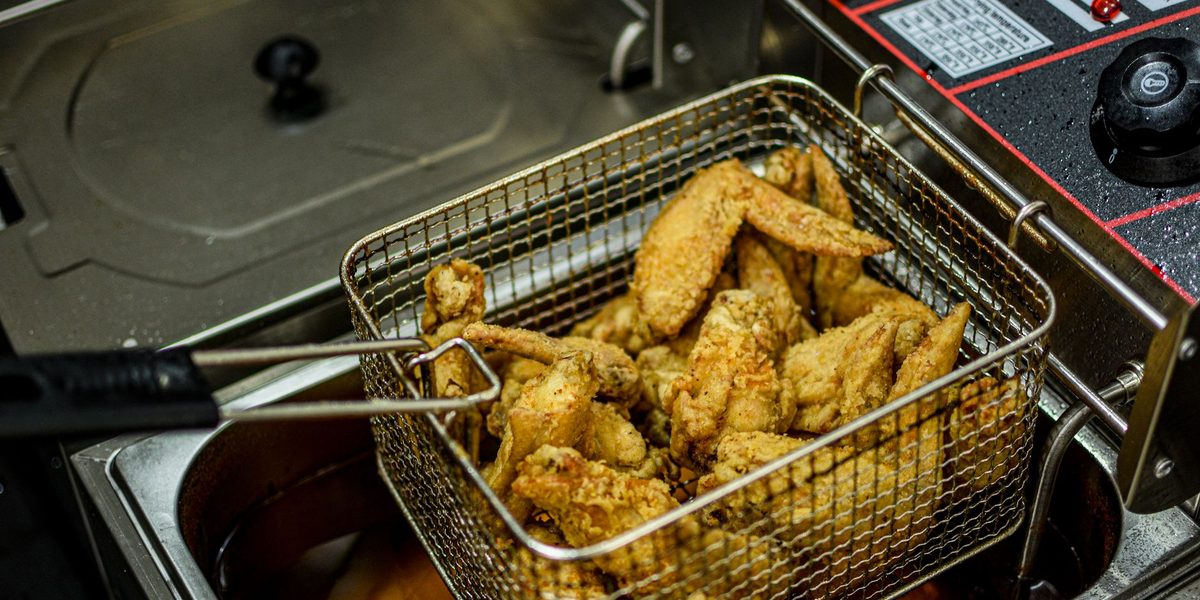
- Deep fryers — great fries, followed by the question of what to do with a vat of used oil, followed by storage exile.
- Single-purpose novelty machines — quesadilla makers, popcorn machines, cotton candy spinners, egg cookers. A skillet or pot already does each of these jobs.
- Countertop soda systems — beloved by daily sparkling-water drinkers, abandoned by everyone else when the canister needs exchanging.
The pattern across all five: high novelty, high cleanup or resupply friction, low weekly frequency. Any machine with all three traits is a future donation, whatever its review scores say.
Features Worth Paying For — and Not
Within a category you've decided to buy, spend on capacity that matches your household, on parts that go in the dishwasher, and on mechanical simplicity — fewer electronics generally means longer life. Ignore app connectivity, which adds a point of failure to machines that never needed one; ignore preset buttons beyond the few you'll use (the panel with sixteen modes is run on two of them in every home); and treat touchscreens on kitchen machines with suspicion, since physical knobs survive wet hands and decades better. Stainless cladding costs more than the plastic version of the same machine and usually buys appearance, not performance — a fair trade only if the machine lives in view.
Warranty and repairability quietly separate tiers too. A machine with replaceable gaskets, carafes, and blades is a long-term appliance; a sealed unit is a countdown. The best value in the whole category is often the plain, knob-driven, mid-priced version of whatever you're buying. Cord length and footprint deserve thirty seconds of attention too — a machine that can't reach an outlet from its natural home migrates around the kitchen until it annoys someone into a cupboard, and a machine an inch too deep for the counter under the cabinets never sits right. Measure the spot before the store, not after.
Reading Your Own Kitchen
Twice a year, run an audit that takes five minutes: touch every appliance and ask when it last ran. Anything that hasn't worked in six months gets demoted — counter to cupboard, cupboard to donation box. Then look at what you cooked all month and ask the reverse question: is there friction a machine would genuinely remove? If you hand-whipped cream three times this month, a hand mixer is overdue. If the big oven heats up daily for two slices' worth of food, a toaster oven pays for itself in comfort each summer. Appliances bought this way — as answers to observed friction — almost never become clutter, because the habit preceded the machine.
Final Thoughts
The small appliance aisle is a bet the industry makes against your self-knowledge, and the house usually wins. Flip the odds by buying backwards: habit first, machine second, counter space granted only on evidence. A kitchen with four hard-working machines and generous empty counters beats a crowded one every day of the week — because the real appliance in any kitchen is the clear space where cooking actually happens. Guard that space accordingly, grant counter tenure slowly and on evidence, and make every machine in the house re-earn its spot twice a year like everything else that lives rent-free.